
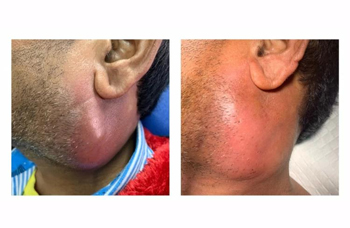
Abscess Drainage (Oral Cavity & Head-Neck)
Abscess drainage in the oral cavity and head-neck region is an essential emergency procedure to remove pus collection, relieve pain, control infection, and prevent spread to deeper spaces. Prompt care reduces risks of airway compromise, systemic infection, and long-term tissue damage.
What is an Abscess?
An abscess is a localized collection of pus caused by bacterial infection. In the oral cavity and head-neck area, abscesses may form in gums, teeth (dental abscess), salivary glands, tonsillar region, peritonsillar space, submandibular or parapharyngeal spaces, and superficial skin or soft tissue. Drainage plus antibiotics is the mainstay of treatment.
When Is Drainage Needed?
Common Types & Locations
1. Periapical / Dental Abscess
Originates from infected tooth pulp and commonly causes facial swelling and severe toothache.
2. Periodontal Abscess
Occurs in the supporting structures of the tooth (gums) and may present with gum swelling and pus discharge.
3. Peritonsillar Abscess (Quinsy)
Collection beside the tonsil causing severe sore throat, muffled voice (hot potato), fever, and difficulty swallowing.
4. Submandibular / Ludwig’s Angina
Deep floor-of-mouth infections; Ludwig’s angina is a rapidly spreading cellulitis that can threaten the airway and requires urgent management.
5. Parapharyngeal & Retropharyngeal Abscess
Deep neck space infections with potential airway compromise and mediastinal spread — often need prompt surgical drainage.
6. Salivary Gland Abscess
Infection in parotid or submandibular glands leading to localized swelling and pus from duct opening.
Symptoms of Head & Neck Abscess
Diagnosis & Investigation
Accurate localization and assessment of depth are essential before drainage.
How Abscess Drainage Is Performed
The approach depends on location and depth. The aim is complete evacuation of pus, irrigation, and source control (e.g., tooth extraction) with minimal morbidity.
1. Office/Bedside Incision & Drainage
Superficial abscesses may be drained under local anaesthesia. A small incision is made, pus evacuated, cavity irrigated, and a gauze wick or small drain may be placed.
2. Intraoral Drainage
For dental, peritonsillar, or some deep oral cavity abscesses, drainage through the mouth avoids skin incisions and is often performed under local or general anaesthesia.
3. External Surgical Drainage
Deep neck or submandibular collections may require an external cervical incision under general anaesthesia to safely and completely drain the abscess.
4. Image-Guided Drainage
Ultrasound or CT-guided percutaneous drainage may be used for selected deep collections, especially in medically unfit patients.
5. Airway Management
When there is airway compromise (severe swelling, Ludwig’s angina, retropharyngeal abscess), securing the airway (intubation or tracheostomy) may be necessary before drainage.
Medical Treatment
Post-Operative Care & Follow-up
Possible Complications
Why Choose Dr. Shrekha Padmakshan?
Dr. Shrekha Padmakshan offers prompt, evidence-based management of oral cavity and head-neck abscesses with emphasis on safety, airway protection, and complete source control to prevent recurrence and serious complications.
If you have a painful swelling in the mouth, face, or neck, fever, difficulty swallowing, or trouble breathing — seek urgent evaluation. Early drainage and treatment prevent complications and speed recovery.