
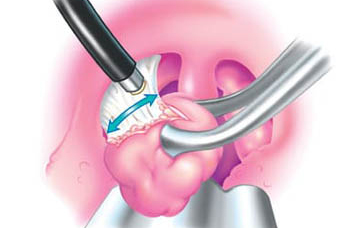
Adenotonsillectomy (Conventional / Endoscopic / Coblator)
Adenotonsillectomy is the surgical removal of the adenoids and/or tonsils to treat recurrent infections, breathing problems, sleep-disordered breathing (including obstructive sleep apnea), and related complications. Modern techniques — conventional (cold steel), endoscopic-assisted, and coblation (low-temperature plasma) — allow tailored treatment with improved safety, less pain, and faster recovery.
What is Adenotonsillectomy?
Adenotonsillectomy refers to removal of the tonsils (tonsillectomy), adenoids (adenoidectomy), or both. The goal is to eliminate the source of recurrent infection or obstruction that interferes with breathing, swallowing, speech, ear drainage, or sleep. The operation is commonly performed in children but is also indicated in adults when conservative treatments fail.
When is Adenotonsillectomy Recommended?
Techniques: Conventional, Endoscopic & Coblator
1. Conventional (Cold Steel / Electrocautery)
Traditional methods use scissors, dissectors, and sometimes electrocautery to remove tonsillar tissue. Reliable and widely used with predictable outcomes.
2. Endoscopic-Assisted Adenoidectomy
Endoscopic visualization improves precision when removing adenoids, reduces residual tissue, and lowers the risk of recurrence by ensuring complete clearance under direct vision.
3. Coblation (Low-Temperature Plasma)
Coblation uses radiofrequency energy in a saline medium to dissolve tissue at lower temperatures than electrocautery. It often results in less intraoperative bleeding, reduced postoperative pain, and faster recovery in selected patients.
4. Partial Tonsillectomy (Tonsillotomy)
In selected children with obstructive symptoms and infrequent infections, partial removal of tonsillar tissue can relieve obstruction while preserving some tonsillar tissue — may have quicker recovery but risk of regrowth.
Common Symptoms Leading to Surgery
Preoperative Evaluation
Appropriate assessment helps select the best procedure and reduces risks.
How the Surgery Is Performed
Adenotonsillectomy is usually done under general anesthesia as a day-care or overnight procedure depending on age and comorbidities. Key steps include:
Recovery & Aftercare
Recovery timelines vary with age and technique — children generally recover faster than adults.
Risks & Possible Complications
Benefits of Surgery
Why Choose Dr. Shrekha Padmakshan?
Dr. Shrekha Padmakshan offers experienced, evidence-based care in adenotonsillar surgery, selecting the best technique (conventional, endoscopic-assisted, or coblation) for each patient to optimise safety, comfort, and outcomes.
If recurrent throat infections, snoring, sleep problems, or ear issues are affecting you or your child, book a consultation to discuss whether Adenotonsillectomy (Conventional, Endoscopic, or Coblator) is the right option. We will evaluate, explain alternatives, and customise a safe plan for best long-term results.