
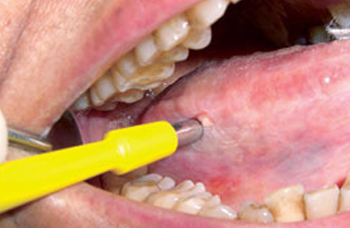
Oral Cavity Biopsy
An oral cavity biopsy is a minor surgical procedure used to diagnose suspicious lesions, ulcers, growths, white/red patches, or persistent changes inside the mouth. It helps detect infections, precancerous lesions, oral cancers, autoimmune disorders, and other mucosal diseases with accuracy.
What is an Oral Cavity Biopsy?
An oral biopsy involves removing a small tissue sample from any abnormal area of the mouth — such as the tongue, gums, cheeks, palate, floor of the mouth, or lips — for microscopic examination. It is a quick, safe procedure performed under local anaesthesia with minimal discomfort.
When is an Oral Biopsy Needed?
Your doctor may recommend a biopsy if any oral lesion persists for more than two weeks or shows suspicious features.
Types of Oral Biopsies
1. Incisional Biopsy
A part of the abnormal area is removed for microscopic analysis. Preferred for larger lesions, ulcers, or suspected malignancy.
2. Excisional Biopsy
The entire lesion is removed along with a margin of healthy tissue. Ideal for small lumps or potentially benign lesions.
3. Punch Biopsy
A circular blade removes a full-thickness core sample. Useful for mucosal patches, inflammatory lesions, or autoimmune disorders.
4. Fine Needle Aspiration Cytology (FNAC)
Used for swellings of the salivary glands or lymph nodes in the neck and jaw area.
Symptoms That May Require a Biopsy
How the Biopsy Is Performed
The procedure is usually done under local anaesthesia and takes 10–20 minutes.
Results usually take 3–7 days and help determine further treatment needs.
Aftercare & Recovery
Risks & Complications
Why Choose Dr. Shrekha Padmakshan?
Dr. Shrekha Padmakshan provides expert evaluation and biopsy techniques with minimal discomfort, ensuring accurate diagnosis and timely treatment planning.
If you notice any persistent oral lesion or suspicious change in your mouth, book an appointment for an oral biopsy. Early diagnosis ensures better outcomes and peace of mind.